
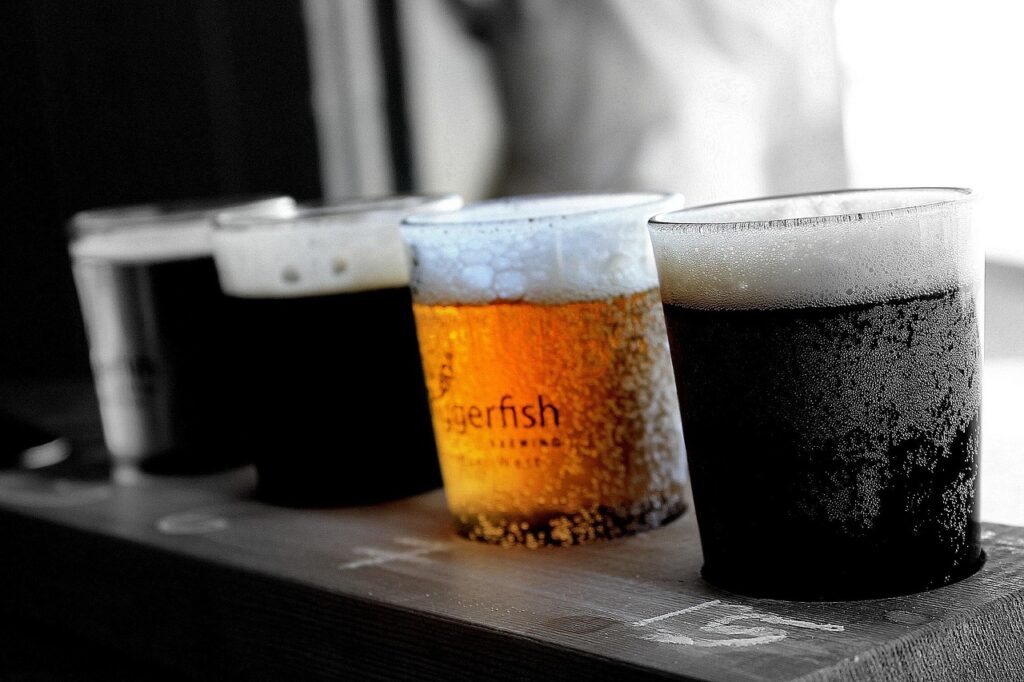
You don’t need special glassware, a tasting notebook, or a vocabulary that sounds like it came with a velvet jacket to taste beer. A little attention is enough. Look, smell, sip, and decide what you enjoy. That works for a crisp lager, a hop-forward ale, or a sour made with Okanagan cherries.
Start with a look and a smell
Take a moment to look at the beer. Notice its color and whether it’s clear or hazy. Those details can set expectations, but they don’t tell you whether the beer will taste sweet, bitter, light, or strong. A dark beer isn’t automatically heavy, and a pale beer isn’t automatically mild.
Next, bring the glass close and take a gentle sniff. Try not to inhale as if you’re checking a gas leak; a calm breath is plenty. Ask yourself what comes to mind. Maybe it’s citrus, toast, herbs, fruit, or something you can’t quite name. There’s no penalty for “smells like beer.”
Take a sip and notice the finish
Take a small sip and let it move across your tongue. Notice the first impression, then what changes as you swallow. Is the beer crisp, soft, tart, bitter, roasty, or sweet? Does the flavor stay around, or does it finish cleanly and invite another sip?
Rather than trying to identify every ingredient, compare a few broad qualities:
- Sweetness and bitterness: Which one stands out, and how do they balance?
- Body: Does it feel light, silky, creamy, or fuller in your mouth?
- Acidity: Is there a tart or tangy edge?
- Finish: Does the taste fade quickly or linger?
These are observations, not grades. “I like this one because it’s crisp” is a complete and useful tasting note.
Compare beers without overthinking it
If you’re tasting more than one beer, try them side by side and take a sip of water between them. Start with the beer that seems lighter or less intense, then move toward stronger flavors. A dry stout and a bright sour will give you very different experiences; noticing that contrast is part of the fun.
Kalamalka Brewing’s core lineup offers several directions to explore, including a Czech pilsner, a West Coast IPA, a hazy pale, a dry stout, and a sour with Okanagan cherries. You can use the same simple questions with each one: What do I smell? What hits first? What stays after the sip?
There’s no correct answer beyond your own taste. If you want a suggestion for where to start or what to compare, get in touch or ask the Kalamalka Brewing taproom team.