
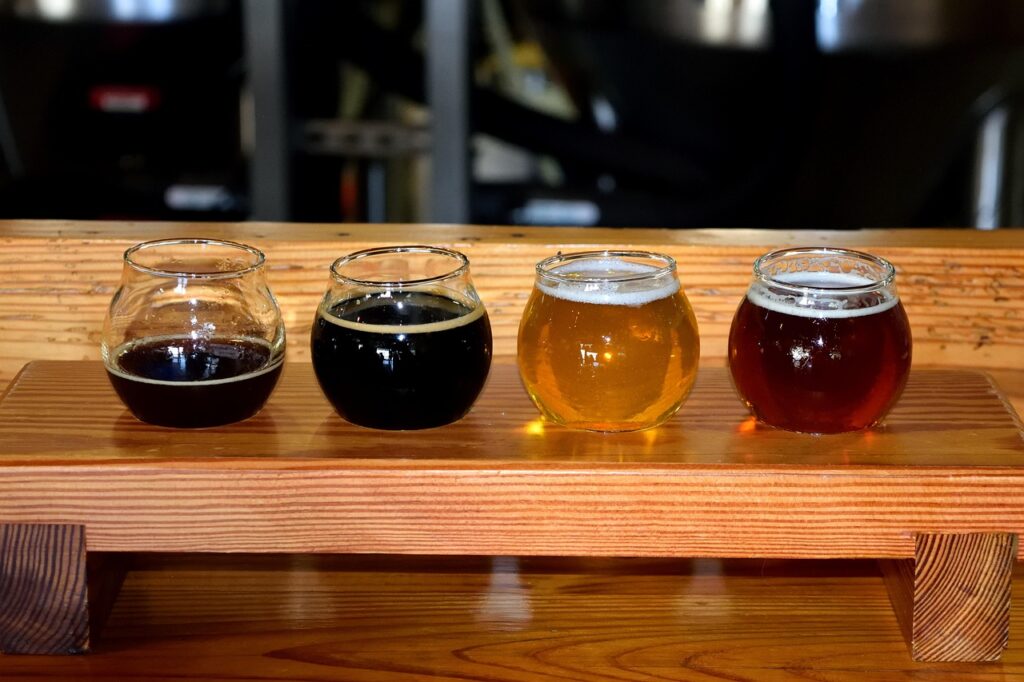
You don’t need a tasting kit or a stack of technical terms to get more out of a beer. A few deliberate seconds can help you notice what’s in the glass beyond “bitter” or “not bitter.” Try this with one beer, or compare two different styles side by side.
Start with the look and aroma
- Look at the beer. Notice its color and whether it’s clear or hazy. Foam and bubbles can be interesting to observe, but they aren’t a scorecard for quality. Different styles naturally look different.
- Smell before you sip. Gently swirl the glass if you like, then take a couple of short sniffs. Ask yourself what comes to mind: citrus, bread, roast, fruit, herbs, or something else? You don’t have to name the exact ingredient. “Fresh” or “toasty” is useful information too.
Aroma can change as the beer warms a little, so there’s no need to rush. If a smell is hard to identify, take a break and come back to it after your first sip.
Take a sip and follow the finish
- Take a small sip. Let it move across your tongue. Notice sweetness, tartness, bitterness, and how strong or gentle the flavors feel.
- Pay attention to texture. Is the beer light and crisp, creamy, soft, or fuller-bodied? Texture is separate from flavor, and it can explain why two beers with similar ingredients feel different.
- Notice the finish. After swallowing, what lingers? It could be a hop bitterness, roasted flavor, fruit-like tartness, or a clean, quick finish. See whether the aroma you noticed at first shows up again.
Compare styles without overthinking
Try a Czech pilsner beside a West Coast IPA. Both can have hop character, but the overall balance and impression may be quite different. Compare a dry stout with a lager to notice differences in color, roast, body, and finish. Or try a sour made with Okanagan cherries and ask how its tartness differs from bitterness.
There are no required answers. Your tasting notes can be as simple as “crisp and herbal” or “dark, smooth, and dry.” Drink at a comfortable pace, have water nearby, and let your preferences matter more than tasting vocabulary. If you want a few suggestions for a side-by-side tasting, get in touch with Kalamalka Brewing.