
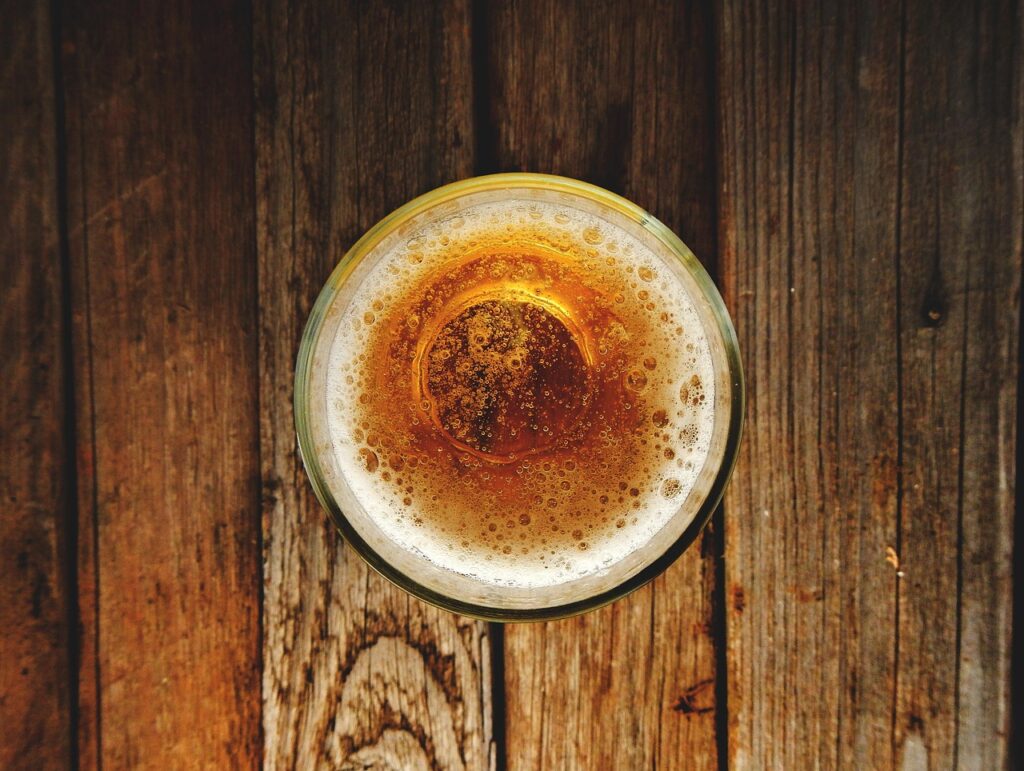
Start with your eyes
Pour your beer into a clean glass and look at it properly. Tilt the glass under light and notice the colour, clarity, and head. A West Coast IPA will glow amber-orange; a Czech pilsner sits pale and bright; a dry stout is nearly black. The bubbles clinging to the side tell you about carbonation. Haze in a pale ale is intentional and good. This part takes fifteen seconds and already you’re seeing things you’d miss from a can.
Smell it before you taste it
Bring the glass to your nose and breathe in. Your nose does most of the heavy lifting in beer tasting. That’s why it’s harder to taste anything when you have a cold. You’ll pick up hops (citrus, pine, grass), malt (bread, caramel, chocolate), fruit, spice, or sourness depending on what the brewer made. Take a few short sniffs rather than one long one. Your brain will reset and you’ll catch more.
Take a sip and let it sit
Don’t swallow right away. Let the beer coat your mouth for a second or two. You’re tasting with your whole mouth now, not just your tongue. Notice the bitterness level, the sweetness, the flavour that builds or fades. Feel the body—is it light and crisp or heavy and thick? Swallow and notice what lingers. A good beer leaves you wanting another sip, not a palate cleanser.
Drink it at the right temperature
This matters more than people admit. A lager at ice-cold temperatures shows you nothing. A stout at room temperature tastes flat and thin. Our crew can point you toward the right glass and temperature for whatever you’re drinking, but generally: crisp styles like pilsners around 8 to 10 degrees Celsius; IPAs and pales around 10 to 12; stouts and sours a bit warmer. Warmer beer doesn’t mean warm—just not arctic.
The goal isn’t to turn yourself into a beer snob. It’s to slow down for five minutes and actually experience what the brewers worked to create. You’ll taste things you didn’t know were there, and that’s the whole point.