
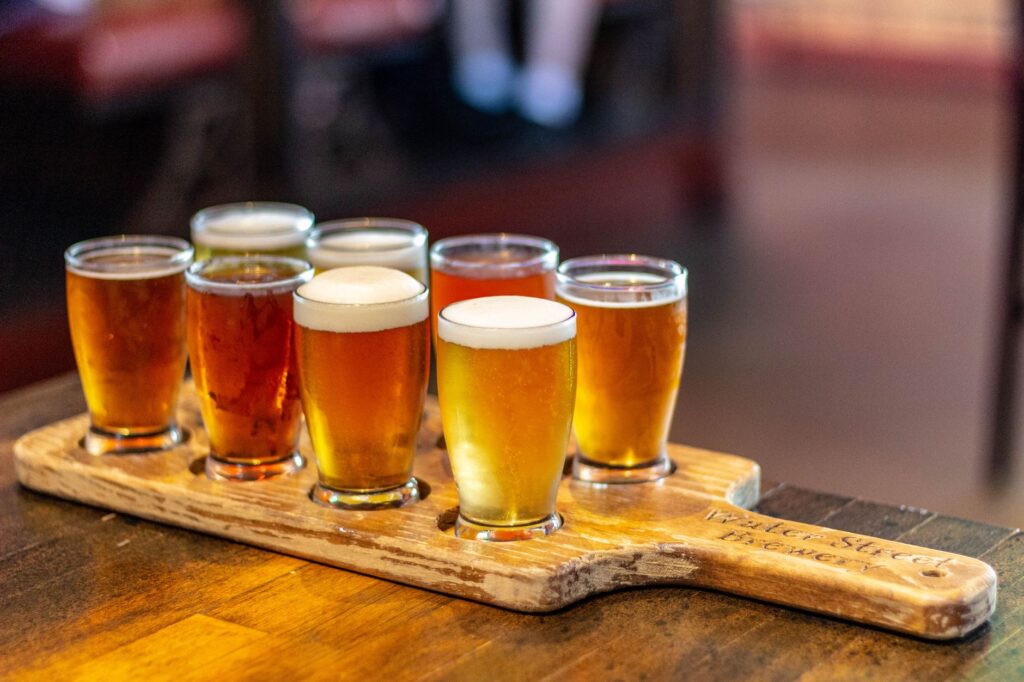
Lager and ale aren’t opposites in color, flavor, or strength. The main difference is how they’re fermented: brewers generally use different yeast strains and fermentation conditions for each. That simple distinction leads to plenty of variation within both families.
The difference starts with fermentation
Ales are typically fermented at warmer temperatures with top-fermenting yeast. Lagers generally ferment cooler with bottom-fermenting yeast, then spend additional time conditioning. These are broad descriptions, not rules that make every beer taste a certain way.
Cooler fermentation and conditioning often help a lager develop a clean, crisp profile. Ale fermentation can leave more yeast-derived aromas, such as fruity or spicy notes, depending on the strain and recipe. Neither approach is automatically better; each gives the brewer a different set of tools.
What you might notice in the glass
A Czech pilsner is a type of lager, while a West Coast IPA and a hazy pale are ales. That doesn’t mean every lager is light or every ale is hoppy. A dry stout, for instance, is an ale, even though its roasted flavors and dark color may be what you notice first.
To compare styles, try looking for a few things:
- Aroma: Is it mostly grain, hops, roast, fruit, or spice?
- Body: Does it feel light and crisp, or fuller and softer?
- Finish: Does the flavor fade cleanly, linger with bitterness, or leave a tart impression?
These are useful clues, not a quiz. A sour with Okanagan cherries may taste tart and fruit-forward, while a lager can offer more malt character than the word “crisp” suggests.
Use style names as a starting point
Style names help set expectations, but they don’t tell the whole story. Ingredients, recipe choices, and brewing decisions shape the finished beer too. Even within one family, two beers can be dramatically different.
At Kalamalka Brewing, the core lineup includes a Czech pilsner and a lager alongside several ales, including a West Coast IPA, hazy pale, and dry stout. Sampling across them is an easy way to hear how fermentation style and recipe work together. If you’d like help choosing a comparison, get in touch with us.